Window tint in a Nebraska summer: what actually keeps a car cool
The number everyone asks about is the one that matters least.
September 6, 2026 · 3 min read
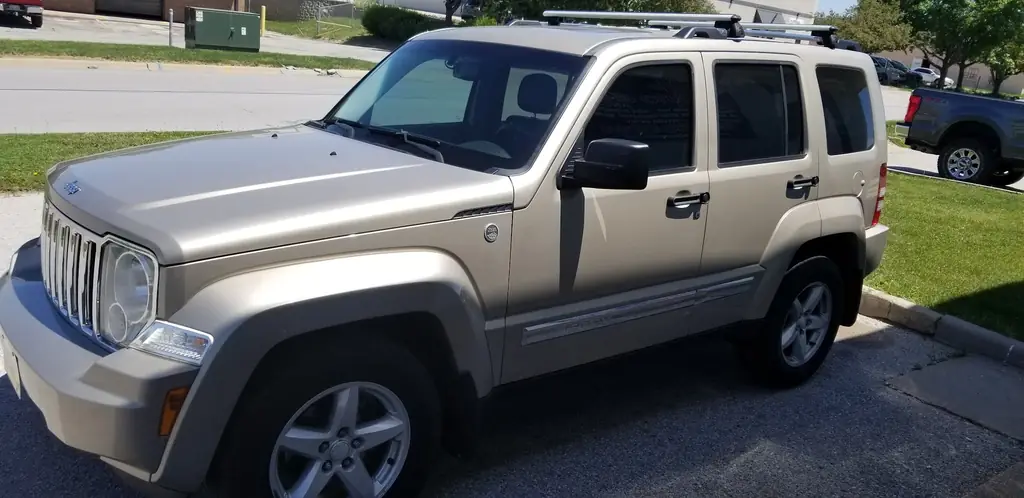
Every tint conversation starts the same way. Somebody asks how dark they can go. It is a reasonable question and it is also the wrong first question, because shade and heat are two different properties and a film can be excellent at one and mediocre at the other.
Three different kinds of light
Sunlight arriving at your car window is roughly three things at once.
- Visible light, which is what you see through and what shade actually describes.
- Infrared, which you do not see at all and which is the majority of the heat you feel.
- Ultraviolet, which you do not see either and which is what fades a dashboard and ages the skin on your left arm.
Shade only tells you about the first one. A very dark film that rejects visible light and passes infrared will make your car look cool and still bake. A lighter film built to reject infrared will feel dramatically better and barely change how the car looks.
This is why the same person can be disappointed by a dark cheap tint and impressed by a lighter good one.
What 60 percent cooler means in practice
Good film keeps a car's interior up to 60 percent cooler. That is a large claim and it is worth translating into things you actually notice.
It is the difference between a steering wheel you can hold at three in the afternoon in July and one you have to steer with two fingertips for the first block. It is a seat belt buckle that does not brand you. It is an air conditioner that gets ahead of the cabin in the first few minutes instead of fighting the glass the whole drive, which on a short trip is the difference between arriving cool and arriving resigned.
Over a longer horizon it is also your interior not fading. Ultraviolet is what turns a black dashboard grey and a red seat pink, and film blocks the overwhelming majority of it.
The safety property nobody buys tint for
There is one benefit of film that never comes up in the showroom and is worth knowing about. Film is a bonded layer across the inside face of the glass, so when a side window is struck hard enough to break, the film holds the pieces together rather than letting them come into the cabin as loose shards.
It is not glass replacement and it is not a security product. But a broken window that stays roughly in one piece is a meaningfully better outcome than one that does not.
Why cheap tint goes purple
Everybody has seen it: a car with a back window that has gone violet, bubbled in the middle and started curling at the corners. That is dyed film reaching the end of its life.
Dyed film works by putting color into an adhesive layer. Ultraviolet light breaks that dye down, and it does not fade evenly, so the film drifts toward purple as one part of the dye survives longer than the rest. At the same time the adhesive gives up and you get bubbling and lift at the edges.
Once a film has gone, it has to be stripped completely before anything new can go on, and stripping old failed film off a rear window with defroster lines in it is careful, slow work. Buying twice is expensive in a way that has nothing to do with the price of the film.
Fitting is half of it
A film is only as good as the install. Glass has to be taken back properly clean, because anything left under the film is under there permanently. The film has to be shaped to the actual curve of the window rather than stretched flat across it. Edges want to be tucked rather than trimmed short, so there is no cut line for dirt to work into.
Done that way, tint stops reading as an accessory. It just looks like the glass came that way.
Choosing for how you actually use the car
A work truck that sits in the sun all day on a job site and a family car that does school runs after dark are not the same brief. One wants maximum heat rejection and does not care much about night visibility through the back window. The other very much does.
We carry a large variety of films and shades so that choice can be made on your actual situation rather than on whatever was in stock. Tell us how the vehicle gets used and we will point at the right part of the range.
A+ Auto Glass & More — 402-763-9914
Call 402-763-9914More articles
Chip or crack: when a windshield can still be repaired
The difference between a twenty minute repair and a new windshield is usually a matter of days, not luck.
What ADAS calibration is, and why a new windshield needs it
A camera aimed a fraction of a degree wrong does not warn you. It just quietly measures the road from the wrong place.