Chip or crack: when a windshield can still be repaired
The difference between a twenty minute repair and a new windshield is usually a matter of days, not luck.
September 6, 2026 · 4 min read
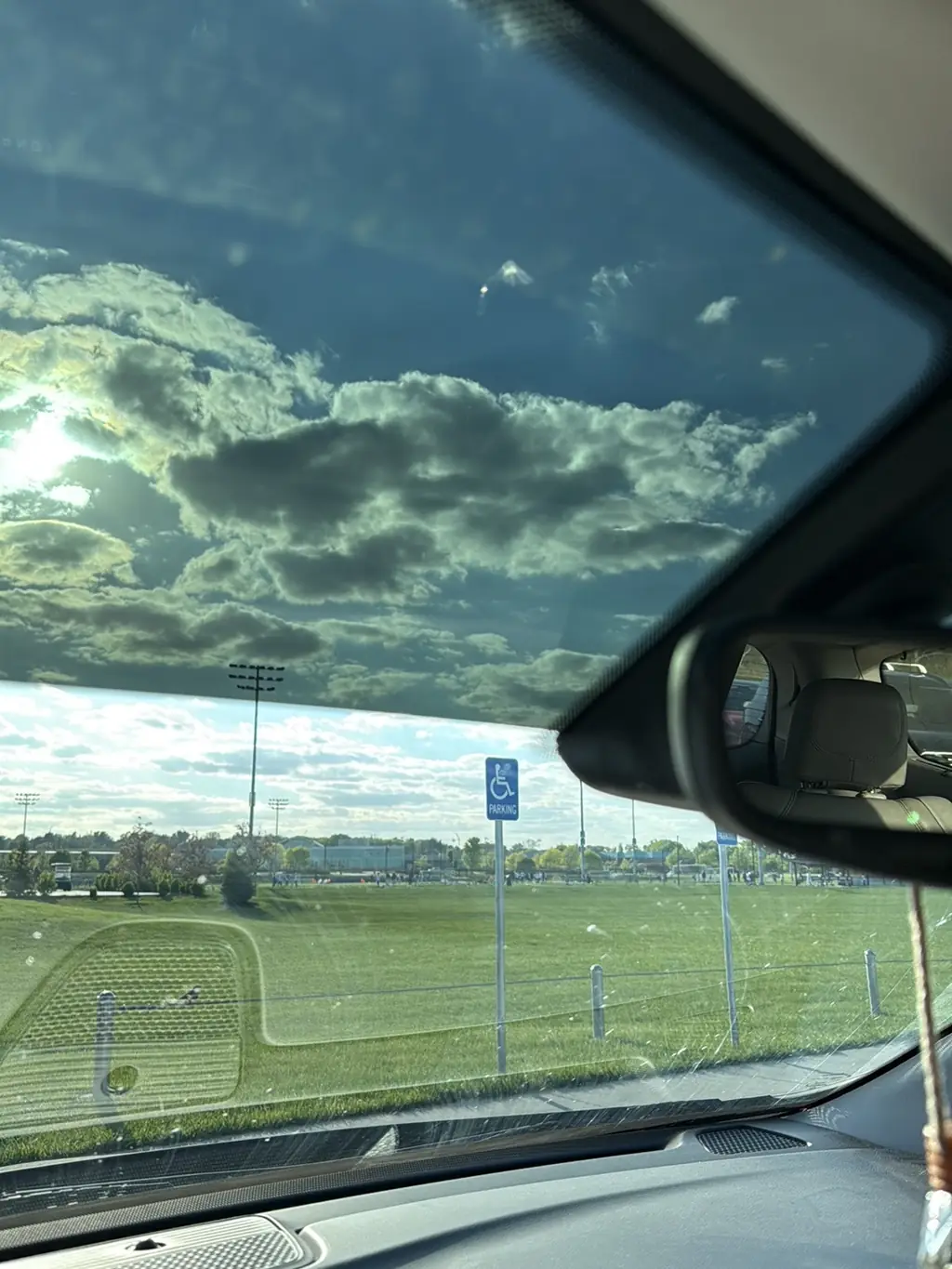
A stone comes off a truck on Dodge Street, you hear the crack, and there is a small star in the glass in front of you. The question everyone asks next is whether it can be filled or whether the whole windshield has to come out. The honest answer depends on four things, and only one of them is luck.
Size, and what the old rules got wrong
The rule of thumb most people have heard is that a chip smaller than a quarter and a crack shorter than a dollar bill can be repaired. That is roughly right and it is a useful starting point, but it was written for windshields that were a lot simpler than the one in your car.
What actually matters is how much of the damage a resin can reach and fill completely. A tight bullseye the size of a pea is a straightforward fill. A star break with six long legs radiating out of it is the same overall diameter and a much harder job, because every leg has to be reached to the tip or the repair will not hold.
Depth, and the layer that decides it
A windshield is two sheets of glass with a plastic interlayer bonded between them. That sandwich is why a windshield crazes instead of shattering, and it is also the line that separates a repair from a replacement.
If the damage is in the outer layer only, there is something solid to inject into and bond to. If it has gone through to the interlayer, or you can feel the damage from inside the car with a fingernail, the structure of the glass has been compromised and no amount of resin puts that back.
Location matters more than most people expect
Two identical chips can get two different answers depending on where they sit.
- Directly in the driver's sightline: a repair leaves a small amount of distortion, and in the one place you look through constantly, that is worth avoiding.
- Within a couple of inches of the edge: the perimeter is where the glass is bonded to the body and where stress concentrates, so edge damage spreads fast and repairs there are unreliable.
- Over a camera or sensor bracket: some vehicles mount driver assist hardware right behind the glass, and damage in that window can interfere with what the camera sees.
- Out at the passenger corner: usually the easiest case, well away from both the sightline and the structural edge.
Time is the variable you control
This is the part worth acting on. A fresh break is clean and dry. Resin flows into it and bonds to bare glass, which is exactly what you want.
A break that has sat for a fortnight has collected road dirt, wax, and moisture. In Omaha it has probably also been through a couple of hard freeze and thaw cycles, and that is the thing that turns a chip into a crack. Water gets into the break, freezes overnight, expands, and levers the legs outward. Add a pothole or a door slam and a repairable chip becomes an eight inch crack that is not repairable at all.
Blasting the defroster at a cold windshield does the same thing from the other direction. Rapid heating expands the inner surface faster than the outer one, and a break that was stable takes off across the glass.
What a proper repair actually involves
The break is cleaned out, then air and moisture are drawn out of it under vacuum. Resin is injected under pressure so it travels to the tip of every leg, cured hard with ultraviolet light, and the surface is polished back flush with the glass.
The goal is structural first. A filled break stops spreading, which is the entire reason to do it. Cosmetically it usually goes from obvious to barely noticeable, and any shop being straight with you will say improved rather than invisible.
Where we stand on it
We repair chips with a high quality resin, and if a chip we repaired later fails at that same point, we credit the price of the repair toward your replacement windshield. That is deliberate. It means we carry the risk of the judgment call rather than you, and it means we have no reason to talk you into a repair that should have been a replacement.
If the answer is replacement, that is what we will tell you. And if your vehicle has a camera behind the glass, the replacement will need a calibration afterward, which we do in the same visit rather than sending you somewhere else for it.
Either way the advice is the same: get it looked at this week rather than next month. The cheapest version of this problem is the one you deal with while it is still small.
A+ Auto Glass & More — 402-763-9914
Call 402-763-9914More articles
What ADAS calibration is, and why a new windshield needs it
A camera aimed a fraction of a degree wrong does not warn you. It just quietly measures the road from the wrong place.
Window tint in a Nebraska summer: what actually keeps a car cool
The number everyone asks about is the one that matters least.